


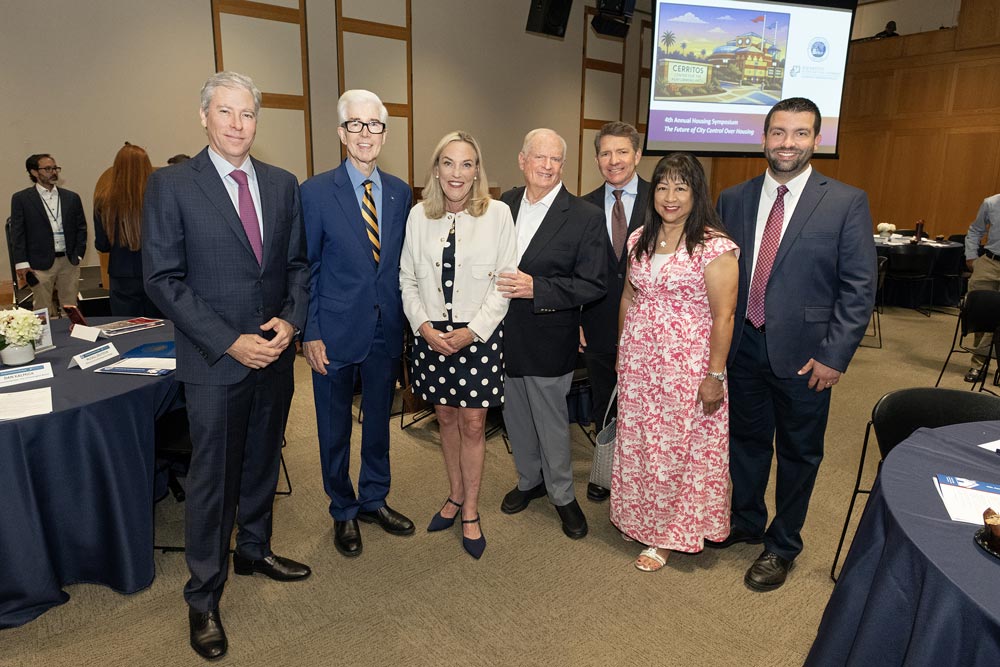
Photo Credit: Diandra Jay, County Photographer
For the fourth consecutive year, Olson Homes brought together some of California’s most influential housing leaders for its annual Housing Symposium, creating an opportunity to discuss one of the state’s most important challenges: how to create more housing while building strong, thriving communities.
This year’s symposium, The Future of City Control Over Housing, was hosted by Olson Homes and co-hosted by former California Governor Gray Davis and the Rose Institute of State and Local Government at Claremont McKenna College. Elected officials, housing experts, developers, planners, legal leaders, and researchers came together around a shared message: “Say Yes to Housing.”
Rather than focusing on the divide between cities, developers, and the state, this year’s conversation centered on collaboration. Scott Laurie, President and CEO of Olson Homes, emphasized that the question is no longer whether California needs more housing, but how we can work together to make it possible.
“We must build, and we must build responsibly,” said Supervisor Kathryn Barger. “Housing is one of the defining challenges of our time, but new housing must be supported by the infrastructure our communities need. The best housing policies are those that both actually get housing built and ensure our communities are prepared for that growth.” As California works to create more housing opportunities, ensuring communities have the infrastructure to support that growth remains essential. Roads, sidewalks, utilities, parks, transportation, and other public services must grow alongside new neighborhoods to create communities that are equipped for the future.
One of the highlights of the symposium was the presentation of a new Rose Institute report commissioned by Olson Homes, Framing the Future: How Three Southern California Cities Built Successful Housing Strategies. The report examined Carson, Santa Ana, and Costa Mesa, highlighting how each city has used locally tailored planning strategies, creative approaches, and community engagement to expand housing while addressing local priorities.
The symposium also gave attendees an advanced look at the latest State of Los Angeles County Housing & Neighborhoods (SOLACHAN) Report, presented by Dr. Richard K. Green and Dr. Caroline Bhalla of the USC Lusk Center for Real Estate. The research highlighted continued demand for living in California despite affordability challenges and emphasized the importance of using data to better understand housing trends, identify barriers, and determine which solutions are making a meaningful difference.
Throughout the day, panel discussions explored how California’s evolving housing laws are changing the relationship between state mandates and local control. One discussion focused on the difference between making housing legally possible and making it financially feasible. Another panel focused on how cities can make state housing policies work at the local level, and emphasized the importance of communicating with residents and helping communities understand how new housing and zoning changes can shape their neighborhoods
As the symposium came to a close, the conversation turned toward the future. While California’s housing shortage remains a significant challenge, the event highlighted a growing willingness among cities, policymakers, developers, and communities to work together toward solutions.
For Olson Homes, the annual Housing Symposium is an opportunity to bring people together, share ideas, and help move the conversation from challenges to action. Creating more housing will require collaboration, local flexibility, financial feasibility, infrastructure investment, and a shared commitment to saying “yes” to housing.


